9Mobile Rebrands as T2 After $750M UK Takeover Amid Network Collapse
When T2 unveiled its bold orange logo at the Eko Convention Centre in Lagos last July, it wasn’t just a new name — it was a last-ditch plea for survival. The company once known as 9Mobile, and before that Etisalat Nigeria, had collapsed to just 2.4 million active subscribers by mid-2025 — down from over 23 million a decade ago. The rebrand followed a $750 million acquisition by LH Telecommunication Limited, a UK-based firm controlled by Nigerian billionaire Thomas Etuh, who now chairs the newly reborn entity. The deal, finalized on July 30, 2024Nigeria, marked the end of a seven-year financial freefall and the beginning of what insiders call "the most ambitious telecom rescue in African history."
A Company That Lost Its Way
The story of T2 begins with ambition. In 2007, the Mubadala Development Company of Abu Dhabi paid $400 million for Nigeria’s fifth GSM license — a bold bet on a market of just 64 million mobile users. Etisalat Nigeria launched in 2008, quickly becoming the fourth major player alongside MTN, Airtel, and Globacom. But by 2017, the parent company had had enough. Citing regulatory headaches and declining returns, Etisalat Group walked away, leaving its 85% stake behind. Emerging Markets Telecommunication Services Limited (EMTS), which held the remaining 15%, took over — and rebranded the network as 9Mobile. What was meant to be a fresh start became a slow bleed. By 2018, 9Mobile had defaulted on over $1.5 billion in loans. Thirteen Nigerian banks, including GT Bank, Zenith Bank, and the Central Bank of Nigeria, were left holding the bag. The Federal High Court in Abuja later approved a forced sale to Teleology Nigeria Limited, but the damage was done. Network quality cratered. Customer trust evaporated. By 2024, 9Mobile had fewer active users than some rural telecom startups.The Turnaround That Almost Wasn’t
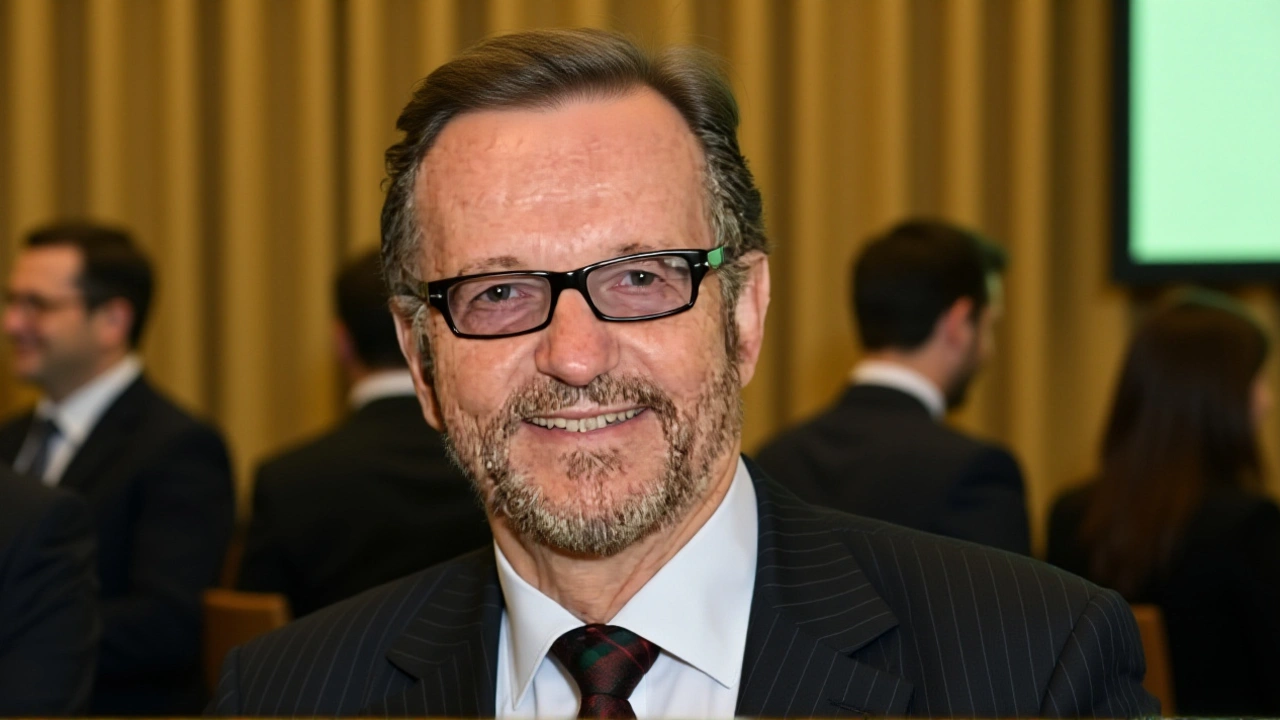
Enter Thomas Etuh. A Nigerian businessman with deep ties to UK finance and a reputation for taking on broken assets, Etuh’s LH Telecommunication Limited stepped in with a $750 million offer for 95.5% of EMTS. The deal required approvals from the Nigerian Communications Commission and the Federal Competition and Consumer Protection Commission. It took 14 months. The African Export-Import Bank, the company’s senior lender, gave its nod in May 2023 — but the real test came later. On July 20, 2025, Etuh stood before a room of journalists, investors, and former employees and said: "It was faith and love for country that prompted my foray into the acquisition." He wasn’t just being poetic. He was signaling a shift: this wasn’t a financial play. It was a mission.Who’s Running T2 Now?
The new leadership team is a who’s who of African telecom veterans. Obafemi Banigbe, CEO, spent decades at Airtel Nigeria, Millicom Tanzania, and Millicom Ghana. His COO, John Vasikiran, and CFO, Abolaji Idowu, bring similar pedigrees. The board includes Daisy Danjuma and Gloria Danjuma, representing the TY Danjuma Group — a conglomerate with stakes in oil, real estate, and insurance. Their involvement isn’t just about capital. It’s about credibility.The $3 Billion Gamble
T2’s recovery plan is structured in four phases: Stabilisation, Modernisation, Transformation, Growth. Phase one? Fix the network. That’s why, in January 2025, T2 announced a $3 billion four-year investment plan — one of the largest telecom capital raises in West Africa this decade. The first move? A landmark infrastructure-sharing deal with MTN Nigeria. "Our customers will now get MTN’s radio coverage in every city where MTN operates," said Banigbe. In practical terms, that means T2 customers can make calls and use data on MTN towers — a lifeline for a network that’s lost 90% of its subscribers.Legal Shadows and the $43 Million Dispute
But not all is smooth. The Federal High Court in Abuja is set to rule on September 24, 2025, in a case brought by businessman Abubakar Ismaila Isa. He claims 43 million shares of EMTS were transferred to the new owners without his consent. If proven, the ruling could unravel parts of the acquisition. The legal cloud is real — but so is the urgency. T2 can’t afford to wait.What Comes Next?
T2’s rebrand isn’t just cosmetic. It’s a signal: this isn’t 9Mobile trying to recover. It’s a new company, born from wreckage, aiming to disrupt. The orange logo? Designed to stand out. The cloud-native, API-driven infrastructure? Built for speed. The partnerships? Strategic, not symbolic. The goal isn’t just to regain market share — it’s to become Nigeria’s most agile, customer-focused operator. But here’s the thing: Nigeria’s telecom market is brutal. MTN holds 45% of subscribers. Airtel, 30%. Globacom, 15%. T2 has 2.4%. To climb back, it needs more than infrastructure. It needs trust. It needs service. And it needs to convince millions of Nigerians who abandoned it that this time, it’s different.Frequently Asked Questions
Why did 9Mobile collapse so badly?
After Etisalat exited in 2017, 9Mobile inherited massive debt — over $1.5 billion owed to 13 Nigerian banks. Poor network investment, leadership churn, and regulatory pressure caused subscriber numbers to plummet from 23 million to just 2.4 million by mid-2025. Customers switched to competitors with better coverage and service.
Who owns T2 now, and why does it matter?
LH Telecommunication Limited, a UK-based firm controlled by Nigerian billionaire Thomas Etuh, owns 95.5% of T2. This matters because Etuh has deep local ties and a reputation for long-term investment — unlike previous owners who treated the company as a short-term asset. His involvement signals stability.
How will T2 compete with MTN and Airtel?
T2 is leveraging a network-sharing deal with MTN Nigeria to instantly expand coverage. It’s also investing $3 billion over four years to build a modern, cloud-based infrastructure. Unlike rivals, T2 is betting on speed, API-driven services, and customer experience — not just tower density.
Is the $750 million acquisition value realistic?
Yes — but it’s not a purchase price. The $750 million covers equity investment, debt restructuring, and future capital injection. Much of it will go toward paying off creditors and funding infrastructure. The actual asset value of 9Mobile’s remaining network is far lower; the premium reflects potential, not current worth.
What happens if the Abuja court rules against T2?
If Abubakar Ismaila Isa wins his claim to 43 million shares, T2 could face ownership disputes that delay its $3 billion rollout. The court’s September 24, 2025 ruling may force a partial restructuring of equity — potentially slowing down the recovery plan, but not necessarily killing it.
Why rebrand to T2 instead of keeping 9Mobile?
9Mobile was synonymous with failure. The name carried baggage: bad service, legal battles, and distrust. "T2" — short for "Transformation Two" — signals a clean break. It’s a blank slate, designed to attract new customers, investors, and talent without the stigma of the past.
Man, I remember when 9Mobile was the only one that actually gave you free data on weekends. Now? I can’t even get a signal in my own apartment. Hope this T2 thing actually works - Nigeria deserves better.
So we’re betting on a billionaire’s emotional connection to his homeland to fix a telecom disaster? That’s either the most beautiful thing I’ve heard all year… or the most dangerous.
This is a classic case of misplaced trust. A man who owns a UK-based shell company suddenly becomes Nigeria’s telecom savior? Where’s the transparency? Where’s the audit? Where’s the accountability? It’s all just pretty words wrapped in orange.
2.4M subscribers. That’s less than Lagos traffic on a Monday. 🤦♀️
Why does a British company need to save Nigeria’s telecom? We had the money, the talent, the infrastructure - we just didn’t care enough. This feels like colonialism with better PR.
Let’s be real - MTN sharing towers is the only reason T2 has a shot. Without that, they’re just a ghost network with a new logo. But hey, if they can make service reliable, I’ll forgive the rebrand. Just don’t mess up the pricing.
Did you know the $750M came from a shell company registered in the Caymans? And Thomas Etuh’s son works for a hedge fund that shorted Nigerian bonds in 2020? This isn’t a rescue - it’s a trap.
Oh wow. A billionaire with a ‘mission’? How quaint. Meanwhile, real African entrepreneurs are getting crushed by NCC bureaucracy. This guy just bought a broken asset and thinks his aura will fix it. Pathetic.
My cousin switched to T2 last week and said the call quality is already better than before. I’m skeptical… but maybe, just maybe, this could be real.
The $3B capex plan is a classic leveraged buyout play - they’re not investing in infrastructure, they’re leveraging the MTN partnership to extract value from the subscriber base. The real asset here isn’t the network - it’s the regulatory capture.
It’s funny how the same people who cry about foreign takeover are fine when it’s a Nigerian billionaire with a UK passport. Identity politics are messy, huh?
They didn't fix the network. They just rented MTN's. That's not innovation. That's begging. And now they want us to trust them? No. No. No.
Interesting. But I’ll believe it when I get 4G in Enugu.
There’s something deeply moving about a man who sees his country’s collapse not as a market failure, but as a moral wound. Whether this works or not - the intention matters. We need more leaders who care enough to lose money trying to fix things.
did they say t2 is short for transformtion two? i thoght it was 'two' like the number... lol
Let me tell you something about telecom collapses in developing economies - it’s not just about capital or towers, it’s about governance, institutional memory, and the erosion of public trust over time. Etisalat left because they saw the rot. 9Mobile tried to patch it with PR and debt. T2 is now trying to rebuild with a borrowed network and a billionaire’s dream. The real question isn’t whether they can fix the infrastructure - it’s whether Nigerians can forgive the past. And that, my friends, is the hardest network to upgrade.
You’re right - forgiveness is the hardest part. But look at how many people still use 9Mobile’s network, even when it’s useless. That’s not loyalty. That’s resignation. If T2 can turn resignation into hope, even just a little… they’ve already won.