Colorado Passes Historic Catholic School Scholarship Tax Credit
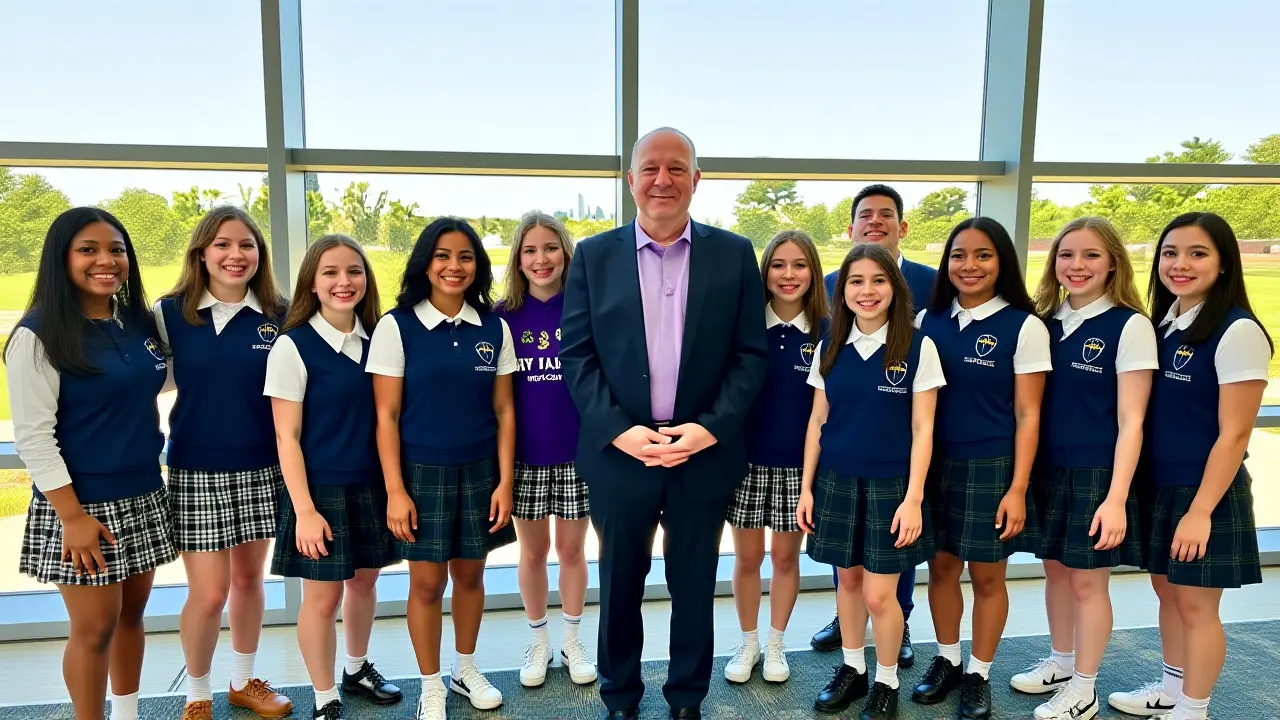
When Gov. Jared Polis, Governor of Colorado, signed the latest education legislation into law, it didn't just shuffle budget lines—it fundamentally shifted how thousands of families in the Centennial State can access private and religious schooling. The move, centered on a new scholarship tax credit program, marks a pivotal moment for Catholic schools across the state, offering a financial lifeline that parents have been asking for years.
The details emerged from Denver earlier this year, where lawmakers debated the future of public funding for non-public education. Here’s the thing: while voucher programs often spark heated debates, this specific mechanism relies on private donations incentivized by state tax credits. It’s a subtle but crucial difference that has allowed the bill to pass with bipartisan support, something rarely seen in Colorado’s polarized political landscape.
How the Tax Credit Actually Works
Turns out, the mechanics are simpler than they sound. Under the new law, individuals and businesses can donate to qualified scholarship-granting organizations (SGOs). In return, they receive a dollar-for-dollar credit against their state income tax liability. If you donate $1,000, your tax bill drops by $1,000. That money then flows directly to SGOs, which distribute scholarships to students attending private K-12 schools, including Catholic institutions.
This isn’t a blank check from the state treasury. It’s a redirection of private capital, encouraged by a fiscal incentive. For many middle-class families who earn too much for traditional aid but not enough to comfortably afford private tuition—often hovering around $8,000 to $15,000 annually per student—this bridge is essential. The twist is that these credits are capped. Once the total amount of credits claimed reaches a statutory limit, no more credits are available until the next cycle. This creates a first-come, first-served dynamic that adds urgency for donors.
Why Catholic Schools Are Central to This Debate
Catholic schools in Colorado have long served as community anchors, particularly in areas where public resources are stretched thin. The Archdiocese of Denver and the Diocese of Colorado Springs have welcomed the initiative, noting that enrollment stability depends heavily on affordability.
"This is about freedom," said one parent advocate involved in the push. "It’s not about leaving the public system; it’s about having a choice when your child needs a different environment to thrive." For Catholic schools, which operate on tight margins and rely on tuition revenue to maintain facilities and staff, even a modest influx of scholarship-funded students can mean the difference between keeping doors open or consolidating campuses.
Historically, Colorado has lagged behind states like Arizona and Florida in adopting robust school choice policies. This new measure brings the state closer to those models, though critics argue it still falls short of true equity. The debate isn’t over who benefits, but who gets left behind. Public school advocates worry about the erosion of the base funding that supports special education services and infrastructure maintenance in district schools.
Reactions From Stakeholders
The response has been sharply divided, as expected. Supporters hail the legislation as a victory for parental rights and educational innovation. Opponents, including segments of the teachers’ unions and public school associations, view it as a siphon of resources that could strengthen underfunded public districts.
"We’re seeing a trend where private interests get subsidized while public obligations get ignored," noted a spokesperson for a local education coalition. "The question isn’t whether families deserve choices; it’s whether this is the most effective way to fund them." Meanwhile, business leaders have praised the flexibility, arguing that allowing companies to direct charitable contributions toward education aligns with corporate social responsibility goals.
Interestingly, some moderate Democrats supported the bill, recognizing that the tax credit structure limits direct state expenditure. By capping the credits, the legislature ensured that the program wouldn’t create an unlimited drain on the state’s tax base. This compromise was key to securing the votes needed for passage.

Broader Impact on Colorado Education
The ripple effects extend beyond individual classrooms. With more students potentially moving to private institutions, public schools may face pressure to adapt. Some districts are already exploring partnerships with SGOs to ensure smooth transitions for students who might otherwise lose access to specialized services. Others are doubling down on improving academic outcomes to retain families.
Data from similar programs in other states suggests that scholarship participation tends to be highest among low-income and minority students, groups historically underrepresented in private education. If Colorado follows this pattern, the demographic makeup of both public and private schools could shift noticeably within five years. Early projections indicate that up to 5,000 students might benefit in the first year alone, though actual numbers will depend on donor uptake and SGO capacity.
What’s Next for Families?
Families interested in applying should start researching approved SGOs immediately. Applications typically open in early spring, with decisions made before the fall semester begins. The process requires documentation of income, academic records, and sometimes interviews. It’s not automatic; families must actively seek out and apply for these scholarships.
Schools, too, need to prepare. Admissions offices at Catholic institutions are already updating their procedures to handle increased inquiries. Counselors are being trained to assist families through the application maze, ensuring that bureaucratic hurdles don’t deter eligible students. The goal is clarity and accessibility, so that the promise of choice becomes a reality rather than a theoretical possibility.

Background: The Long Road to School Choice
This legislation didn’t appear out of nowhere. For decades, Colorado voters and legislators have grappled with the balance between public accountability and private freedom. Previous attempts at voucher programs failed due to constitutional concerns and lack of broad support. The tax credit model emerged as a workaround, leveraging existing charitable deduction frameworks to achieve similar ends without triggering the same legal challenges.
In 2022, neighboring states expanded their own school choice initiatives, putting pressure on Colorado to act. Advocacy groups like Colorado Parents United campaigned tirelessly, organizing town halls and lobbying lawmakers. Their persistence paid off, culminating in the recent signing ceremony. Now, the real test begins: implementation. Will the system work as intended? Will it serve the families it promises to help? Only time—and data—will tell.
Frequently Asked Questions
Who is eligible for the Catholic school scholarship tax credit?
Any Colorado resident or business entity can donate to a qualified scholarship-granting organization (SGO) and receive a tax credit. Students must attend a participating private K-12 school, including Catholic institutions, and meet income guidelines set by the SGO. Priority is often given to low-income families, students with disabilities, and those from foster care.
How much is the tax credit worth?
The credit is dollar-for-dollar against state income tax liability. If you donate $500, your tax bill decreases by $500. There is usually an annual cap on the total amount of credits available statewide, meaning once the pool is exhausted, no further credits are issued until the next cycle.
Does this cost taxpayers more money?
Not directly. The program uses tax credits, not direct appropriations. This means the state loses potential revenue only if donors would have paid those taxes anyway. However, because the credits are capped, the maximum impact on state revenue is predictable and limited, unlike unfunded mandates or direct subsidies.
When do applications open for families?
Applications typically open in January or February each year, with deadlines in March or April. Families should contact specific SGOs directly, as timelines can vary slightly. Early preparation of documents like tax returns and report cards is recommended to avoid delays.
Can public schools use this funding?
No, this specific tax credit program is designed exclusively for private, non-public schools, including religious institutions like Catholic schools. Public schools continue to receive funding through traditional property taxes and state allocations. However, some districts may partner with SGOs to support students transitioning between systems.